Sümela Monastery in Pictures
Photographs do more to explain Sümela Monastery than words alone — the way the buildings are pressed flat against a sheer rock face nearly 300 meters above the Altındere valley floor is something most visitors have to see to believe. This gallery collects representative images of the monastery's cliff-face exterior, the Rock Church, and the surrounding national park, so you know what to expect and where to point your own camera. For technique and timing advice, see the photography guide.
The Cliff-Face Exterior
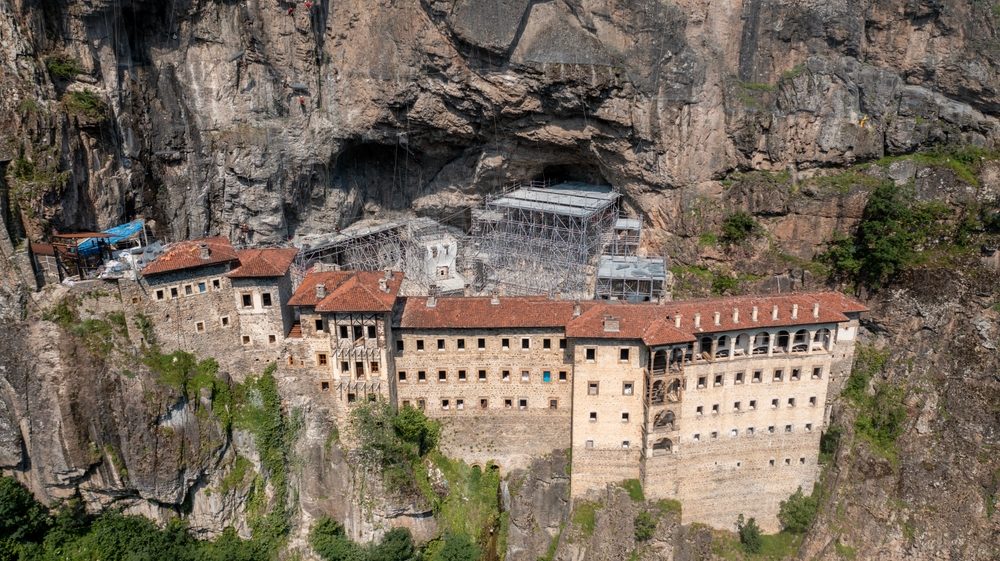
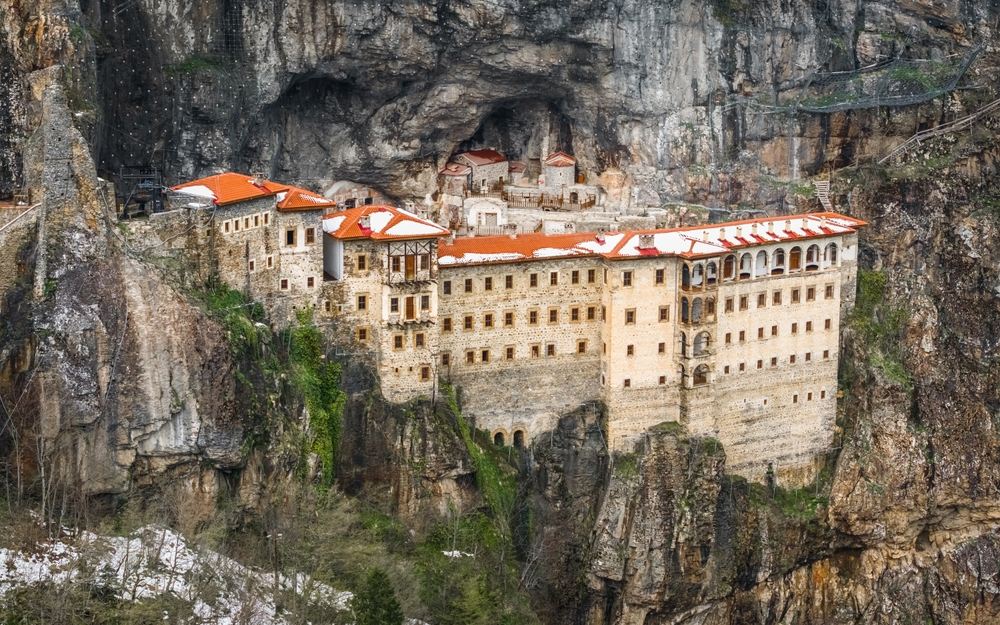
The defining image of Sümela: multiple storeys of stone and timber construction wedged directly into the rock of Karadağ ("Black Mountain"), rising almost 300 meters above the valley floor. This is the view most visitors come for, best seen from the switchback trail across the ravine — see the hiking trail guide for the exact spot.
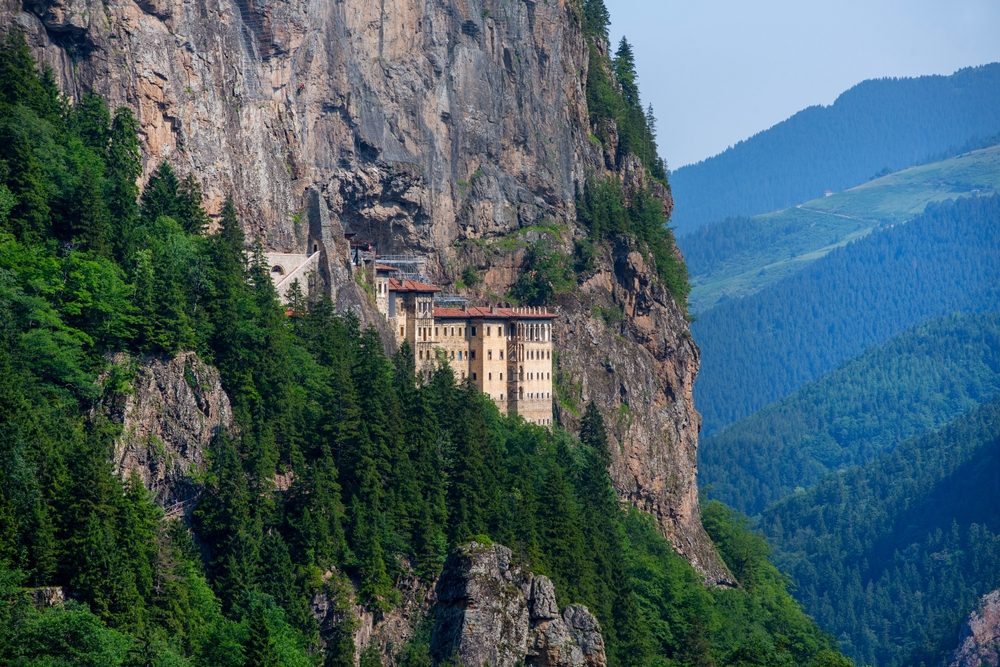
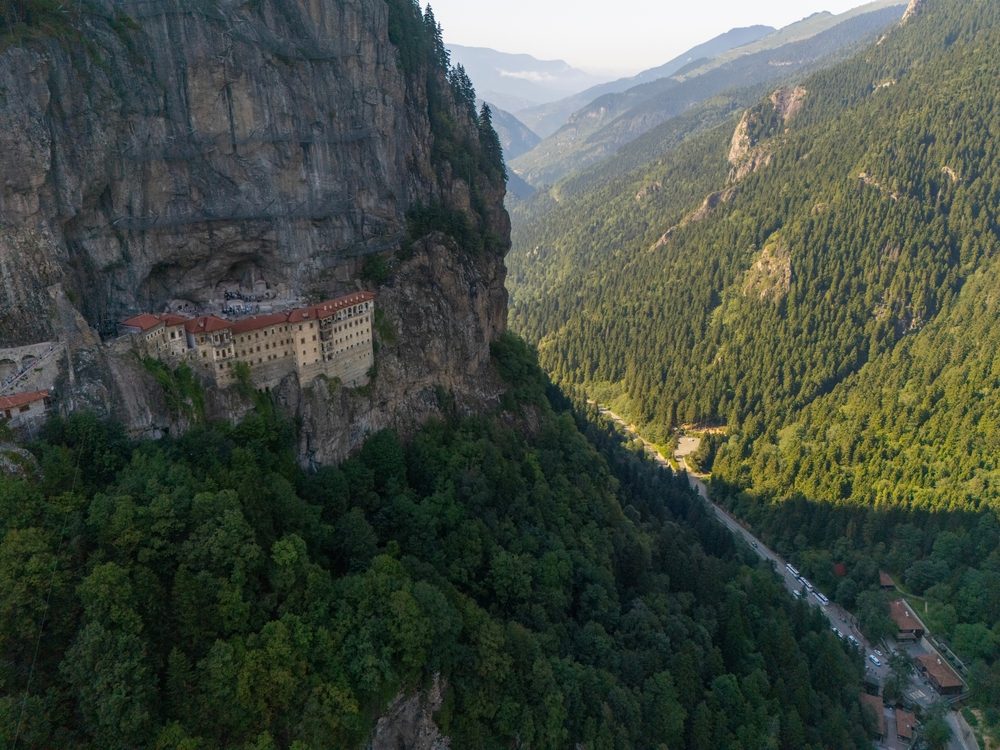
A wider perspective showing how the monastery sits within the dense pine and beech forest of Altındere National Park, with the Black Sea climate keeping the surrounding slopes green through most of the year.
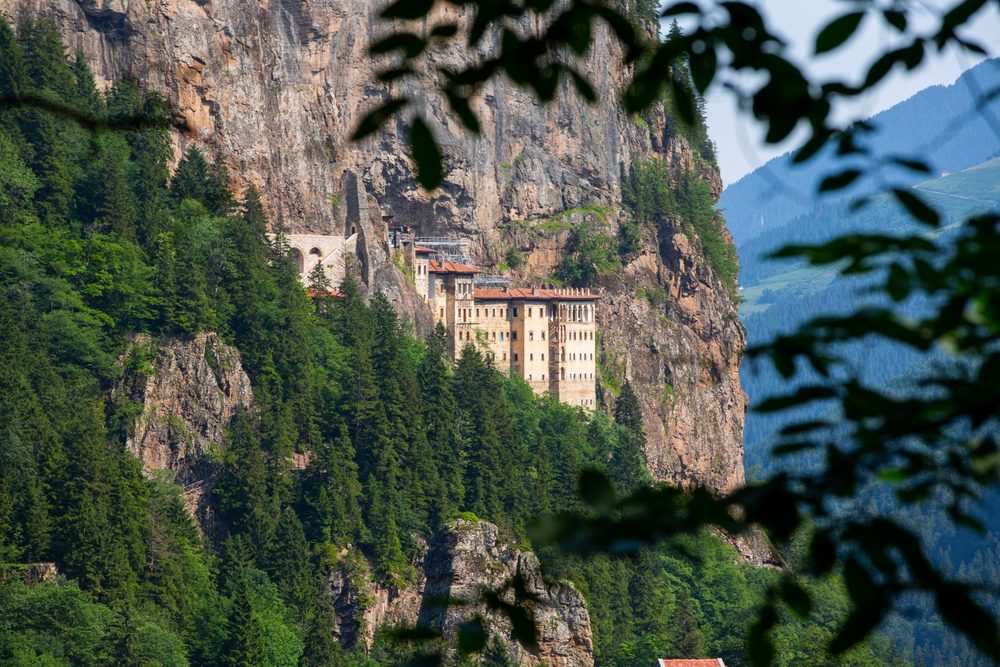
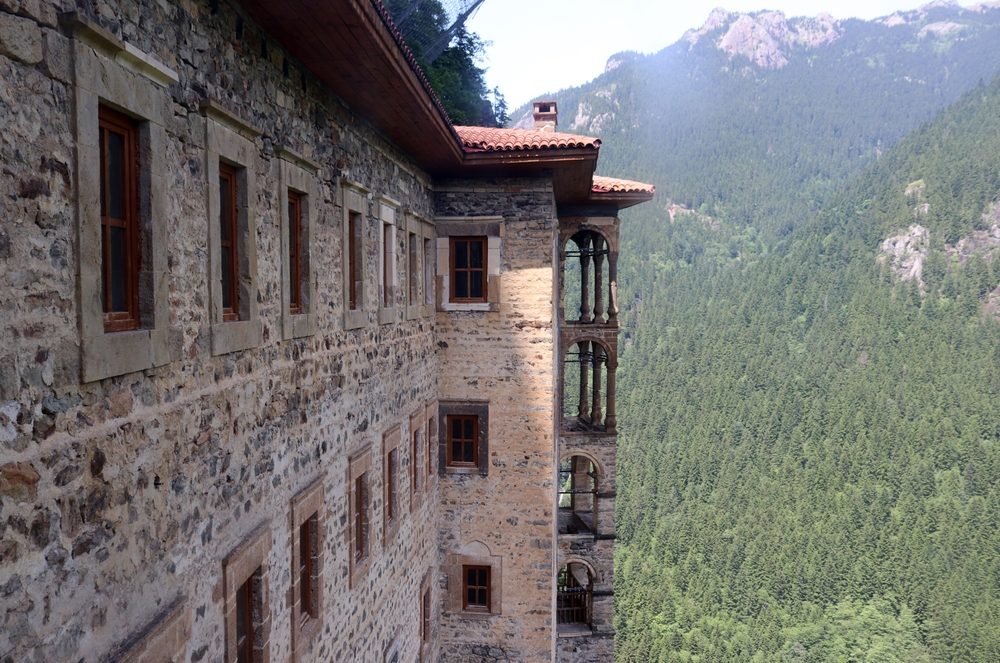
A closer look at the layered facade — monk cells, guest quarters, and window openings stacked against bare rock, a reminder of just how much building activity was compressed onto a narrow ledge of cliff over many centuries.
Approaching the Monastery
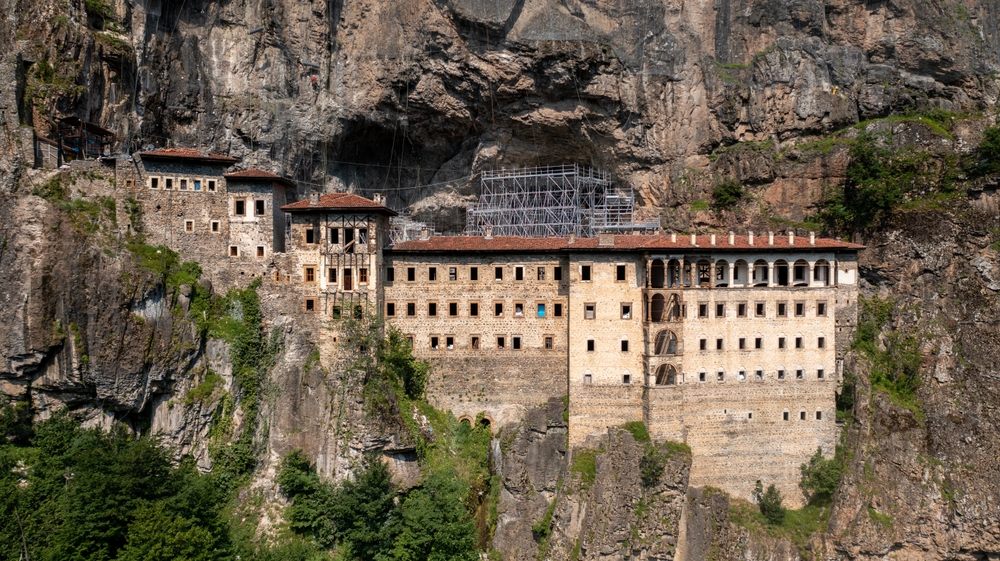
The approach trail winds uphill through forest before switching back toward the monastery entrance. Comfortable footwear is essential; the full guide to timing and difficulty is in the hiking trail article.
The arched aqueduct that historically carried water to the complex is one of the most photogenic structures at Sümela, visible from several points along the approach and from the entrance terrace.
Inside the Rock Church
Inside the cave-set Rock Church, layered Byzantine frescoes cover both walls and ceiling, depicting biblical scenes including the Creation and the life of Christ. Some sections show centuries of wear and past graffiti damage, but the artistry is still striking. Full detail in the frescoes guide.
Even the exterior rock face outside the cave church carries painted scenes, a distinctive feature of Sümela's Byzantine decoration that continues beyond the church's interior walls. See rock church and architecture for context on how this space was built and decorated.
The Wider Valley
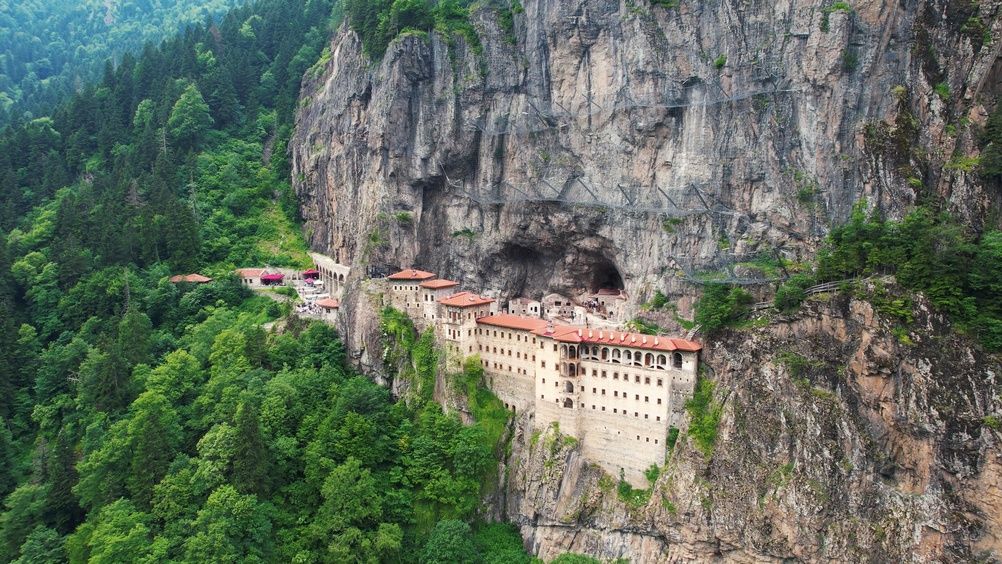
The Altındere valley itself, thick with pine and beech forest and often streaked with low Black Sea cloud, forms the backdrop to every view of the monastery. This is the same national park landscape covered on a typical day trip from Trabzon.
What These Photos Reveal About Sümela's Story
Looking across the gallery, a few themes stand out that help explain why Sümela draws visitors from around the world. First is sheer improbability of the site itself: monks in 386 AD chose a cliff ledge nearly impossible to reach, and every generation since — through the Byzantine era, the Empire of Trebizond, and the Ottoman period — kept building onto that same narrow shelf of rock rather than relocating to easier ground. The cliff-face photos capture that persistence better than any description.
Second is the density of the frescoes. Unlike many Byzantine churches where painted decoration survives only in fragments, Sümela's Rock Church preserves extensive, layered scenes across both the interior vaults and the exterior rock face — a rarer combination that photographs reveal more clearly than a written inventory ever could. Some of the paint layers date to different centuries, painted over earlier work as the church was renewed and expanded.
Third is the setting itself. Every photograph of Sümela includes the forest, the mist, or the valley in some way, because the monastery cannot be separated from Altındere National Park's landscape. That combination of architecture and wilderness is part of what makes the site feel different from a typical museum or ruin — visitors experience a genuine hike and a change in altitude and climate before they ever reach the entrance.
Seasonal Variation in the Gallery
Sümela looks noticeably different across the year, and it's worth knowing this before you visit if a particular look is what you're after:
- Spring (April–May): fresh green forest canopy, higher chance of mist and cloud in the valley, waterfalls and streams running fuller after snowmelt
- Summer (June–August): the clearest and driest conditions, best odds of unobstructed views but also the busiest crowds and harshest midday light
- Autumn (September–November): the most photogenic foliage, with gold and copper tones in the beech forest contrasting against the grey stone
- Winter (December–March): the quietest season with occasional snow dusting the cliff, though access can be limited by weather — check opening hours before planning a winter shoot
Planning Your Own Photos
If these images have you planning your own visit, pair this gallery with the photography guide for advice on timing, light, and etiquette inside the fresco chambers. For the practical side of the trip — hours, tickets, and getting there — see opening hours and getting there. Many visitors also combine a Sümela visit with the Trabzon day trip itinerary or a guided tour that includes photo stops at the best viewpoints along the way.